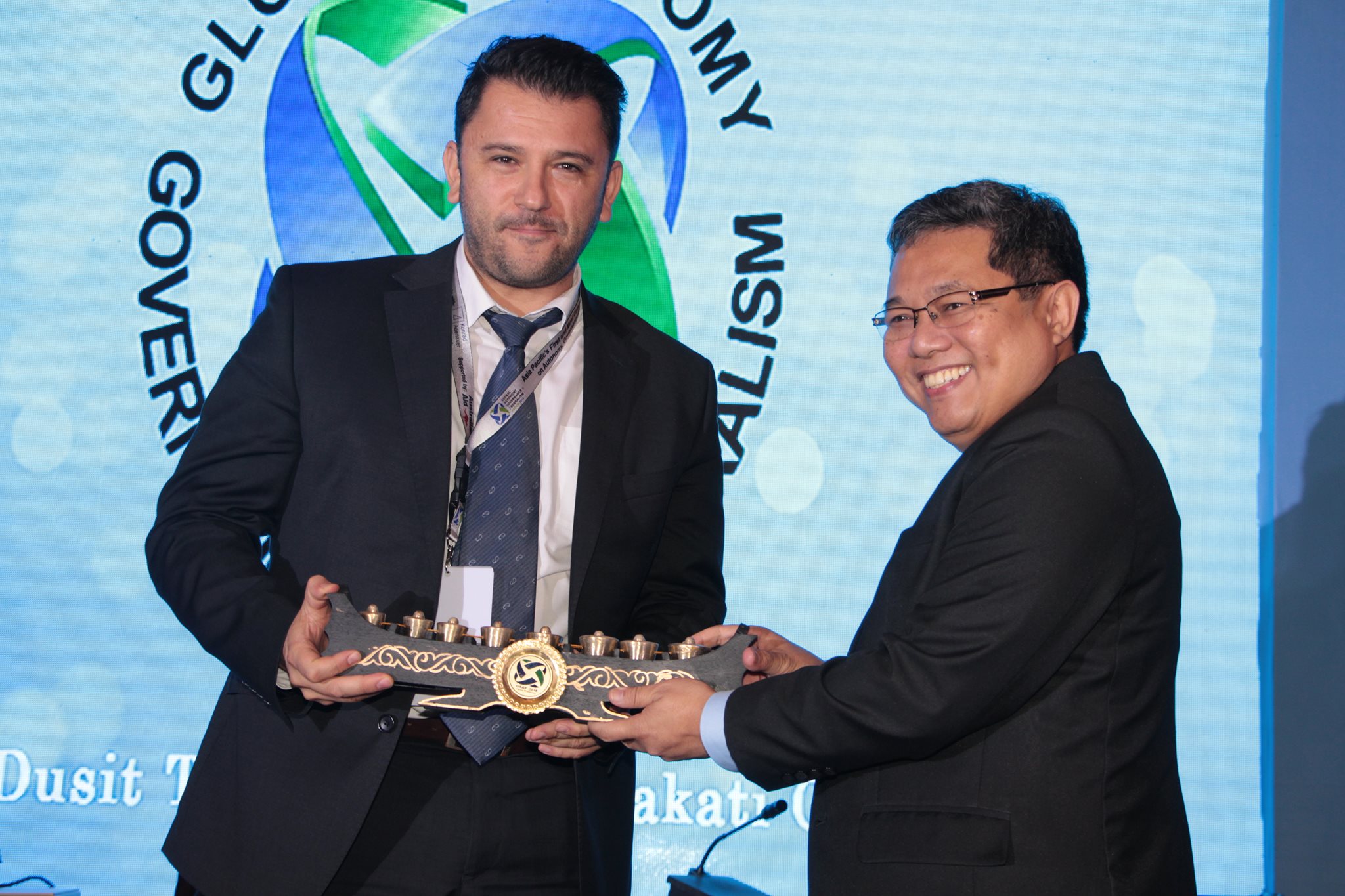
The Forum’s Director of Programs in Asia and Australia, Phillip Gonzalez, presented at the Global Autonomy and Governance Forum in Manila, Philippines.
Mr. Gonzalez was asked to speak on the panel “Federalism and Addressing Societal Divides” presenting an Australian case. His presentation focussed on Australia’s ‘Closing the Gap’ policy on addressing Indigenous disadvantage, he detailed some of the challenges of implementation, cooperation and coordination within Australia’s Federation. Here he illustrated how the ‘Close the Gap’ policy demanded major coordination across all levels of Australian governments.
Close the Gap sought to enable Indigenous Australians access to those same socio, cultural and economic opportunities as other Australians. Its targets focused on health, education, and employment outcomes; policy areas that involve all three levels of government and thus involved an incredible degree of intergovernmental cooperation. Mr Gonzalez described the COAG (Australia’s peak intergovernmental forum) decision which finally brought the issue into a coordinated policy framework which matched this decision with substantial resources at all levels of government in an attempt to address Indigenous disadvantage.
Closing the gap on Indigenous disadvantage remains one Australia’s biggest social policy challenges.
The Global Autonomy and Governance Forum, was hosted by the Institute for Autonomy and Governance, Australian Aid and Konrad Adenauer Stiftung.
The Autonomy and Governance Forum focusses on an area of great importance. As a conflict resolution device, power sharing and autonomous arrangements for minority groups are central to peace negotiations. There are significant challenges in meeting these demands. Effective distribution of power to compliment policy and balancing demands for self-determination on one hand and the state’s inherent sovereignty on the other are major challenges.
There has been increasing interest and preference globally in considering decentralised autonomy and decision making as a political solution to violent internal conflicts. Increasingly the Philippine government is pursuing a possible shift in its system of government from a unitary to a federal or decentralised system of government to address, among others issues, the conflict in Mindanao.