FORUM OF
FEDERATIONS
LEARN MORE
PROGRAMS THEMATIC LEARN MORE PROGRAMS COUNTRY LEARN MORE
What is Federalism?

In federal countries, power is shared between a government for the whole country – which is sometimes called federal government, national government or Union government – and governments for federal units within this country. Federal units are also often called provinces, states or cantons. Federalism means the constitution divides power between at least two levels or orders of government.Both orders have a direct electoral relationship with their citizens. In some federal countries, people also elect their local government, which may also be constitutionally recognized.

The federal government is responsible for common purposes for the whole country such as national defence, currency and foreign relations. The states or provinces are empowered to act within their areas of responsibility as it is described in the constitution. The federal government cannot arbitrarily take away the power of the federal units.

Watch this Forum of Federations animated video called, “What is Federalism?” to get a basic understanding of Federalism.

Click the blue button below to learn more about Federalism including which countries are federal and benefits of federalism

Forum of Federations Resource Library
Publications icon

Publications

ForumFedCast logo

Podcast

Blog icon

Blog

Video Library icon

Video Library

Courses

Forum of Federations Programs
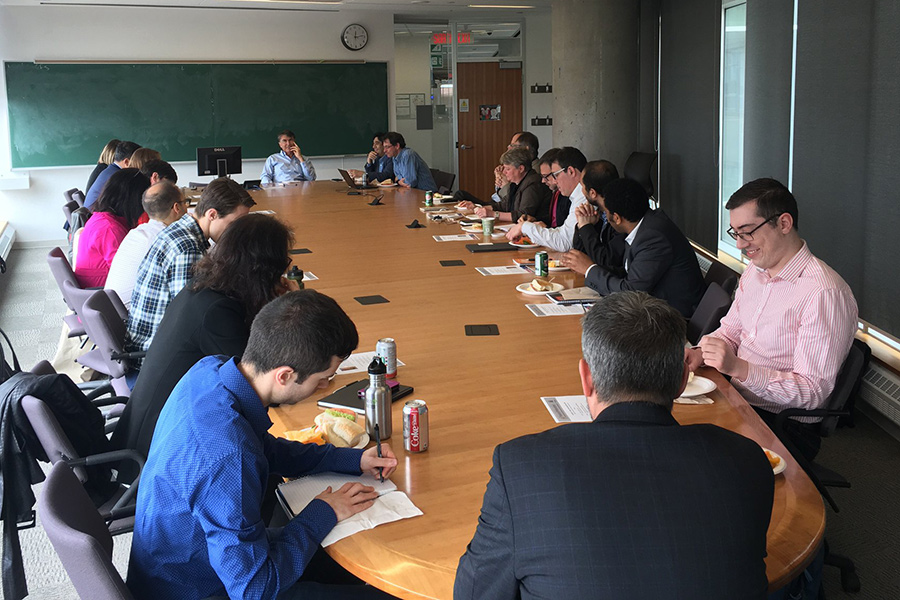
Group of people discussing around round table

Thematic Programs

Thematic Programs concern the development and mobilization of knowledge on federal and multilevel governance systems.

Woman writing

Country/Regional Programs

Country/Regional Programs are demand-led initiatives which respond to the needs of stakeholders and donors concerning the creation, development, and reform of governance systems in emerging federal and multilevel countries.

Forum News

15 hours ago

Forum of Federations
Lecture by Former Canadian Foreign Minister Prof. Stéphane DionOrganized by Forum of Federations and Freie Universität Berlin« Canada and Europe: Strategic Partners Beyond the Trump Years »Stéphane Dion is a former Canadian diplomat and politician who served as Canada’s Ambassador to Germany from 2017 to 2022 and to France and Monaco from 2022 to 2025, as well as Special Envoy to Europe from 2017 to 2025. From 2006 to 2008, he was Leader of the Opposition and led the Liberal Party of Canada.He also served as Minister of Foreign Affairs (2015–2017), Minister of the Environment (2004–2006), and Minister of Intergovernmental Affairs (1996–2003). He represented the district of Saint-Laurent-Cartierville (later renamed Saint-Laurent) in the House of Commons from 1996 to 2017.Back at the Université de Montréal, where he was previously a professor of political science, Stéphane Dion is now the university’s Diplomat in Residence, where he aims to share his experience with students.🔹 AbstractTo a large extent, the mutual strategic security of Europe and Canada, our ability to defend democracy worldwide, including at home, our ability to achieve our economic diversification goals, to pursue truly sustainable development, and to create a carbon-neutral economy will depend on strengthening our alliance and implementing an increasingly strong and effective long-term partnership, beyond the Trump years, which brings not just words but real results.🔹 ProgrammeProf. Dr. Dr. h.c. Günter M. Ziegler, President of Freie Universität Berlin, will deliver the welcoming remarks for Stéphane Dion.Following Dion’s approximately 30-minute lecture, there will be time for discussion.The event is jointly organized by the Research Unit on the Political System of the Federal Republic of Germany at the Otto Suhr Institute of Political Science, Freie Universität Berlin, and the Forum of Federations.🔹 Date and timeNovember 18, 2026, starting at 3:00 p.m. (doors open at 2:30 p.m.)🔹 VenueFreie Universität Berlin, John F. Kennedy Institute for North American Studies, Lansstraße 7–9, Seminar Room 203, 14195 BerlinNearest public transport station: Dahlem-Dorf (U3 underground line)🔹 About Prof. Dr. Stéphane Dion: fas.umontreal.ca/en/diplomat/🔹 About the Forum of Federations: www.forumfed.org/about/🔹 ContactFelix KnüplingVice President ProgramsForum of Federationswww.forumfed.orgEmail: knuepling@forumfed.orgProf. Dr. Sabine KroppFreie Universität BerlinDepartment of Political and Social SciencesEmail: sabine.kropp@fu-berlin.de🔹 More detailswww.polsoz.fu-berlin.de/polwiss/forschung/systeme/polsystem/Veranstaltungen/Vortrag-des-ehemalige... ...
View on Facebook (opens in a new tab)
𝗪𝗵𝗲𝗻 𝘄𝗼𝗺𝗲𝗻 𝗹𝗲𝗮𝗱, 𝘀𝗼𝗰𝗶𝗲𝘁𝗲𝘀 𝗯𝗲𝗰𝗼𝗺𝗲 𝗺𝗼𝗿𝗲 𝗿𝗲𝘀𝗶𝗹𝗶𝗲𝗻𝘁In fragile and unstable contexts, women are often among the first to identify emerging challenges and understand their impact on families, communities, and institutions.Yet their leadership remains essential to shaping effective responses and building more resilient societies.Recognizing women’s leadership is not simply a matter of representation. It is an investment in stability, inclusive governance, and sustainable change. Through its Women Who Lead Change initiative, the Forum of Federations is bringing together women leaders from around the world to exchange experiences, strengthen their leadership capacities, and explore innovative responses to today’s governance challenges. 📍 𝗖𝗵𝗶𝗮𝗻𝗴 𝗠𝗮𝗶, 𝗧𝗵𝗮𝗶𝗹𝗮𝗻𝗱 - 𝗝𝗮𝗻𝘂𝗮𝗿𝘆 𝟮𝟬𝟮𝟳An international gathering will offer a space for dialogue, learning, and collaboration among women committed to advancing more inclusive, resilient, and responsive societies.Are you a woman leader working in or on fragile contexts? Apply to join this international programme and become part of a global network of women committed to building more inclusive, resilient, and responsive societies. 🔗 𝗗𝗶𝘀𝗰𝗼𝘃𝗲𝗿 𝘁𝗵𝗲 𝗽𝗿𝗼𝗴𝗿𝗮𝗺𝗺𝗲 𝗮𝗻𝗱 𝗮𝗽𝗽𝗹𝘆: wwlchub.org/ Interested in supporting this initiative? Explore partnership opportunities: lnkd.in/guGs3vuF ...
View on Facebook (opens in a new tab)
What is Federalism?
Popular Pages
The Future of Federalism

Click here to experience this special Forum event

Social Media